 By Sarah Mitchell
Our Editorial Research & Methodology
The Two-Story Temperature Struggle is Real
If you live in a two-story home, you know the drill. You set the thermostat to a comfortable 72 degrees downstairs, but by the time you head up to bed, the master suite feels like a literal sauna. Or, you crank the AC to cool the upstairs, and your living room turns into a walk-in freezer. This is the classic multi-story thermal imbalance, and it is exactly why a standard, 'dumb' thermostat just does not cut it anymore.
In my experience, the problem is not usually your HVAC system. It is the physics of heat rising and the fact that your thermostat is likely stuck in a hallway on the first floor, blissfully unaware of the heatwave happening ten feet above it. To fix this, you need a smart thermostat designed to handle multiple zones or, at the very least, one that uses remote sensors to get a full picture of your home's climate.
By 2026, smart thermostats have evolved beyond simple scheduling. We are now looking at Matter 2.0 integration, AI-driven predictive cooling, and sensors that can detect not just motion, but actual body heat to know which rooms are occupied. Let's dive into what actually works for a two-story layout.
Why Remote Sensors are Non-Negotiable
Here is the thing: a thermostat can only measure the temperature of the air immediately surrounding it. In a two-story house, that single data point is useless. If your thermostat is in the dining room, it has no idea that the south-facing bedroom upstairs is baking in the afternoon sun.
🏆 Our Top Picks
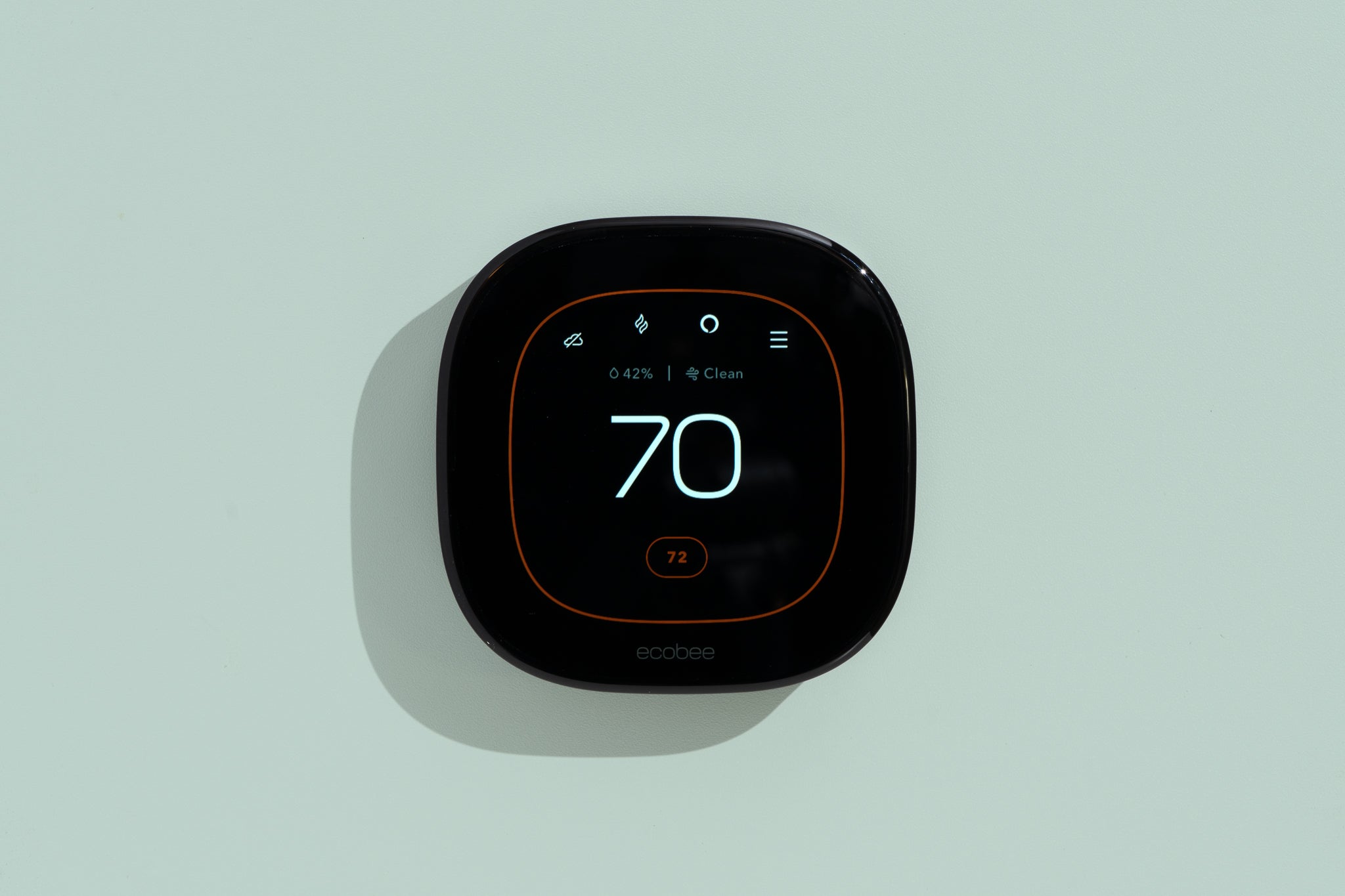
Ecobee Smart Thermostat Premium
The gold standard for multi-story homes. It includes a high-quality zinc remote sensor and features built-in air quality monitoring and a hidden smoke alarm 'listen' feature. Its 'Follow Me' mode is the best in the business for tracking occupancy across floors.
Check Price on Amazon →Google Nest Learning Thermostat (4th Gen)
Perfect for those who want the house to learn their habits automatically. The 4th Gen model features a high-res mirrored display and improved support for the Nest Temperature Sensor (2nd Gen), making it much more effective at balancing two floors than previous versions.
Check Price on Amazon →Honeywell Home T10 Pro Smart Thermostat
Designed for professional-grade HVAC setups. It uses RedLINK technology for its sensors, which offers a 200-foot range—far superior to the Bluetooth sensors used by competitors. This is the best choice for very large two-story homes with signal interference issues.
Check Price on Amazon →Wyze Thermostat v2
The best value option that still supports remote sensors. While it lacks some of the high-end AI features of Nest or Ecobee, it provides reliable scheduling and remote monitoring for a fraction of the price, making it ideal for budget-conscious homeowners.
Check Price on Amazon →Amazon Smart Thermostat
A simple, low-cost entry into smart climate control. It uses Honeywell Home technology for reliability and integrates perfectly with Alexa's 'Hunches' to adjust the temperature when it thinks you are away or asleep. Note that sensors are sold separately.
Check Price on Amazon →Remote sensors are the game-changer. These small, battery-powered pucks sit in different rooms and beam temperature and occupancy data back to the main hub. When you have a sensor in the nursery and one in the living room, the thermostat can average the two readings. Even better, most modern systems allow you to prioritize certain rooms at specific times of day.
The 'Follow Me' Feature
What most people miss is the 'Follow Me' logic. In 2026, the best systems use occupancy sensors to see where you actually are. If you are watching a movie downstairs, the system ignores the empty, hot bedrooms upstairs. When you head up to bed, the system shifts its focus, cooling the bedroom to your preferred sleep temperature while letting the downstairs drift. This saves a massive amount of energy while keeping you comfortable where you actually stand.
Top Smart Thermostats for Multi-Story Living
I have tested dozens of these units in real-world colonial and townhouse layouts. Here are the ones that actually solve the problem without requiring a degree in electrical engineering to install.
| Model | Best For | Sensor Range | Matter Support |
|---|---|---|---|
| Ecobee Smart Thermostat Premium | Overall Performance | 60 Feet | Yes (Native) |
| Google Nest Learning (4th Gen) | Hands-off Automation | 50 Feet | Yes |
| Honeywell Home T10 Pro | Large Homes | 200 Feet | Yes |
| Wyze Thermostat v2 | Budget Conscious | 40 Feet | No |
Deep Dive: Ecobee vs. Nest for Two Stories
The rivalry between Ecobee and Nest is the 'Coke vs. Pepsi' of the smart home world. But for a two-story home, the choice usually comes down to how much control you want. Ecobee has historically led the pack because they include a remote sensor in the box and their software is built around the idea of 'averaging' multiple rooms.
Nest, with its 4th Generation hardware released recently, has finally caught up. Their new sensors are more discreet and the AI learning algorithm is better at predicting when your upstairs will start to overheat before it actually happens. Nest is great if you want to set it and forget it. Ecobee is better if you want to dive into the data and set specific 'Comfort Settings' for every hour of the day.
The Matter 2.0 Advantage
In 2026, you should not buy a thermostat that does not support Matter. This protocol ensures that your thermostat can talk to your Apple HomePod, your Amazon Alexa, and your Google Home hub simultaneously. For a two-story home, this means you can use a Siri command upstairs to change the temperature on a Nest thermostat downstairs without any lag or 'cloud' issues. It makes the whole house feel like one cohesive system.
Installation Secrets for Multi-Story Success
Installing a smart thermostat is usually a 20-minute job, but two-story homes often have a few quirks. First, check for a C-wire (Common wire). This provides constant power to the thermostat. If your old house doesn't have one, look for the Ecobee; it includes a Power Extender Kit that works wonders.
Second, sensor placement is everything. Do not put a sensor near a window, even if it is the room you want to monitor. The direct sunlight will trick the sensor into thinking the room is 90 degrees, causing your AC to run indefinitely. Place them on interior walls, about five feet off the ground, away from air vents.
Dealing with Zoned HVAC Systems
If your home has two separate HVAC units (one for each floor), you will need two thermostats. The beauty of modern apps is that you can group them. You can create a 'Goodnight' scene that sets the downstairs unit to 'Eco' mode and the upstairs unit to 'Sleep' mode with one tap. If you have a single unit with dampers (physical flaps in the ducts), make sure you choose a thermostat like the Honeywell T10 Pro, which is specifically designed to handle damper logic.
The Hidden Cost of Comfort: Energy Bills
Let's be real: cooling a second floor is expensive. Heat rises, and your attic is likely a giant heat sponge. Beyond just buying a smart thermostat, you should look at the data these devices provide. Most high-end models in 2026 offer 'Runtime Reports.'
If you see that your AC is running for 40 minutes every hour just to keep the upstairs at 74 degrees, you have an insulation problem, not a thermostat problem. Use the thermostat's 'Fan Only' mode to circulate air between floors without running the compressor. This can often balance the temperature by pulling cool air from the basement or first floor up to the second floor for a fraction of the cost.
Predictive AI and the Future of Cooling
We are seeing a massive shift in how these devices operate. The latest high-end models now integrate with your local utility provider's dynamic pricing. In a two-story home, the thermostat might 'pre-cool' your upstairs bedrooms at 3:00 PM when electricity is cheap, so that by 9:00 PM when prices spike, the system can stay off while you sleep in a pre-chilled room.
This kind of 'thermal mass' management is the future. It treats your home like a battery, storing coolness in the walls and furniture when it is most efficient to do so. For a large two-story structure, this can save upwards of 30 percent on annual cooling costs.
Final Thoughts on Choosing Your Hub
Don't just buy the one that looks the coolest. Think about your daily flow. Do you spend all day in a home office upstairs? You need the Ecobee's superior occupancy sensing. Do you want the house to just 'know' what you want? The Nest's learning algorithm is still the king of intuition. If you have a massive 5,000 square foot home with thick walls, the Honeywell T10's long-range RedLINK sensors are the only way to go.
A smart thermostat is the brain of your home. In a two-story house, it is the difference between a comfortable evening and a sweaty, frustrated night of tossing and turning. Choose wisely, place your sensors strategically, and let the AI handle the rest.
Frequently Asked Questions
Where is the best place to put sensors in a 2-story home?
Place sensors in the primary bedroom upstairs and the main living area downstairs. Avoid placing them near windows, kitchens, or direct air vents to prevent false readings.
Can one smart thermostat control two separate HVAC units?
No, if you have two separate physical HVAC units, you will need two separate thermostats. However, you can sync them within the same app for unified control.
Do I really need a C-wire for these thermostats?
Most modern smart thermostats require a C-wire for constant power. If you don't have one, look for models like the Ecobee that include a Power Extender Kit (PEK).